

Why Retaining Walls Are One of the Smartest Investments for Washington Yards
If you've ever watched a heavy Pacific Northwest rainstorm turn your side yard into a small river, you already understand the problem retaining walls were built to solve. Washington's combination of clay-heavy soil, steep lots, and long, wet winters puts a lot of pressure on landscapes that weren't designed to handle it.
A well-built retaining wall does more than hold back a slope. It stabilizes soil, protects your foundation, and often unlocks square footage of yard you didn't know you had. It's also one of the few hardscape upgrades that pays you back in both function and curb appeal — a rare combination in home improvement.
In this article, we'll walk through what retaining walls actually do, why drainage is the part most people underestimate, and how to know if your property could benefit from one.
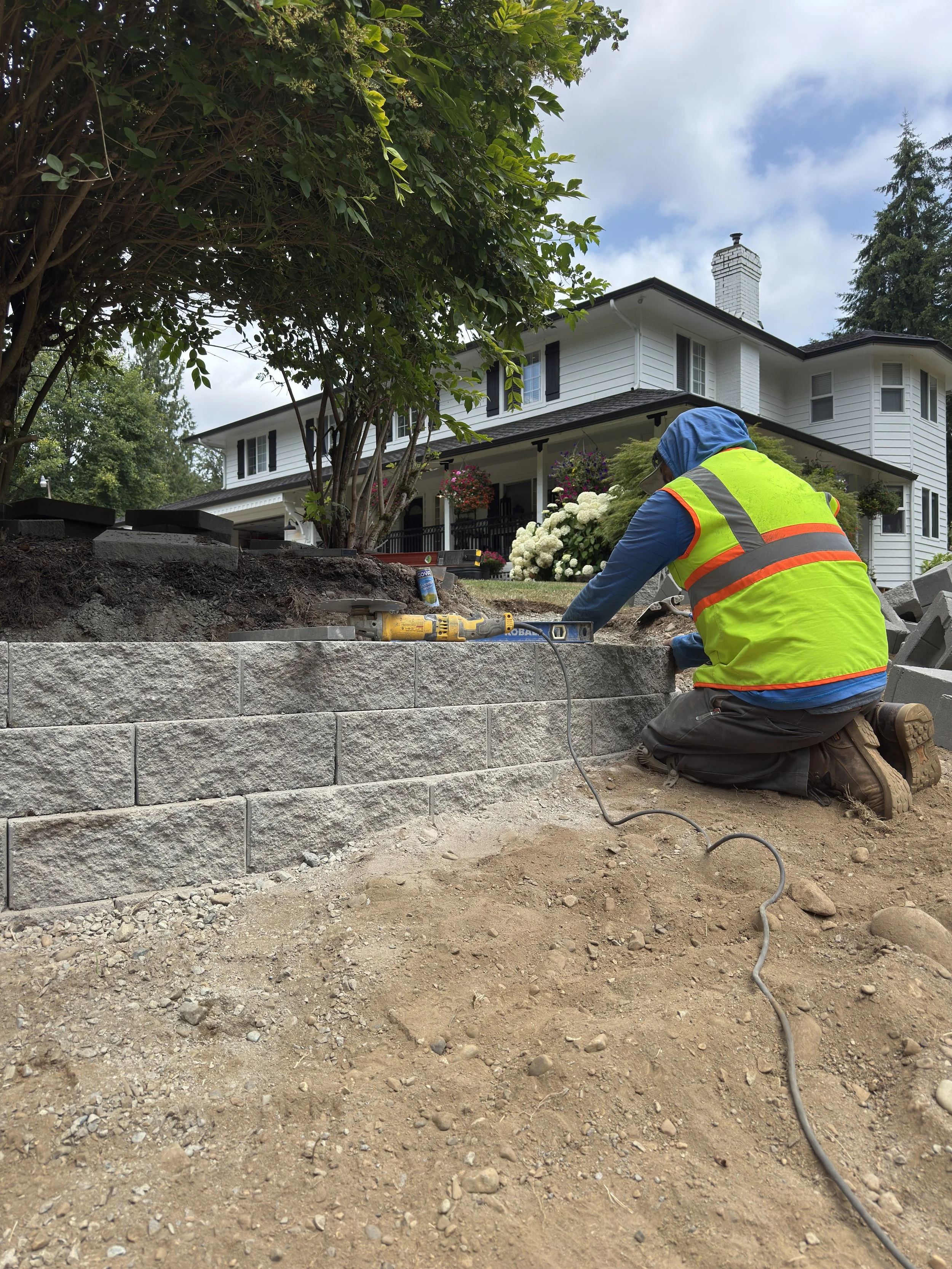
What Is a Retaining Wall?
At its core, a retaining wall is a structure built to hold soil at different elevations, creating a level, usable surface where a slope used to be. Instead of grass and mulch sliding downhill every time it rains, the wall holds everything in place.
There are several common materials used for retaining wall construction, and each one brings something different to the table:
Concrete retaining wall blocks — modular, interlocking units that stack quickly and hold up well in wet climates
Natural stone — a higher-end option with a timeless, organic look
Segmental retaining wall systems — engineered block systems designed for taller walls and heavier loads
Poured concrete — a solid, seamless option often used for structural or commercial applications
Decorative boulders — a rustic look that blends naturally into wooded or sloped Washington properties
The right material depends on a handful of factors: how the property is laid out, how much water needs to move through the area, your budget, and the overall style you're going for. A modern paver patio might call for clean-lined concrete block, while a wooded lot with mature trees often looks more at home with a boulder wall.
How Retaining Walls Prevent Soil Erosion
Erosion happens gradually, which is part of why it's easy to miss until it becomes a real problem. Every time it rains, water moves across your yard and takes a little bit of soil with it. On a flat lot, that's rarely noticeable. On a slope, it adds up fast.
Over time, unmanaged erosion can lead to:
Soil washing into driveways or walkways after every storm
Exposed roots where topsoil has thinned out
Slopes that look more uneven year after year
Damaged or shifting landscape beds
Standing water that never seems to drain
A properly installed retaining wall interrupts that cycle. By holding soil in place at a fixed elevation, it stops the slow washout that erosion causes and keeps your landscaping — and your yard's shape — where it's supposed to be.
Catching erosion early matters more than most homeowners realize. A small slope issue today is a much smaller project than the driveway undermining, foundation exposure, or full-blown drainage failure it can turn into a few winters down the road.
Why Drainage Is the Most Important Part of the Job
This is the part of retaining wall construction that separates a wall built to last from one that's likely to fail in a few years — and it's also the part that's easiest to overlook, because you can't see it once the wall is finished.
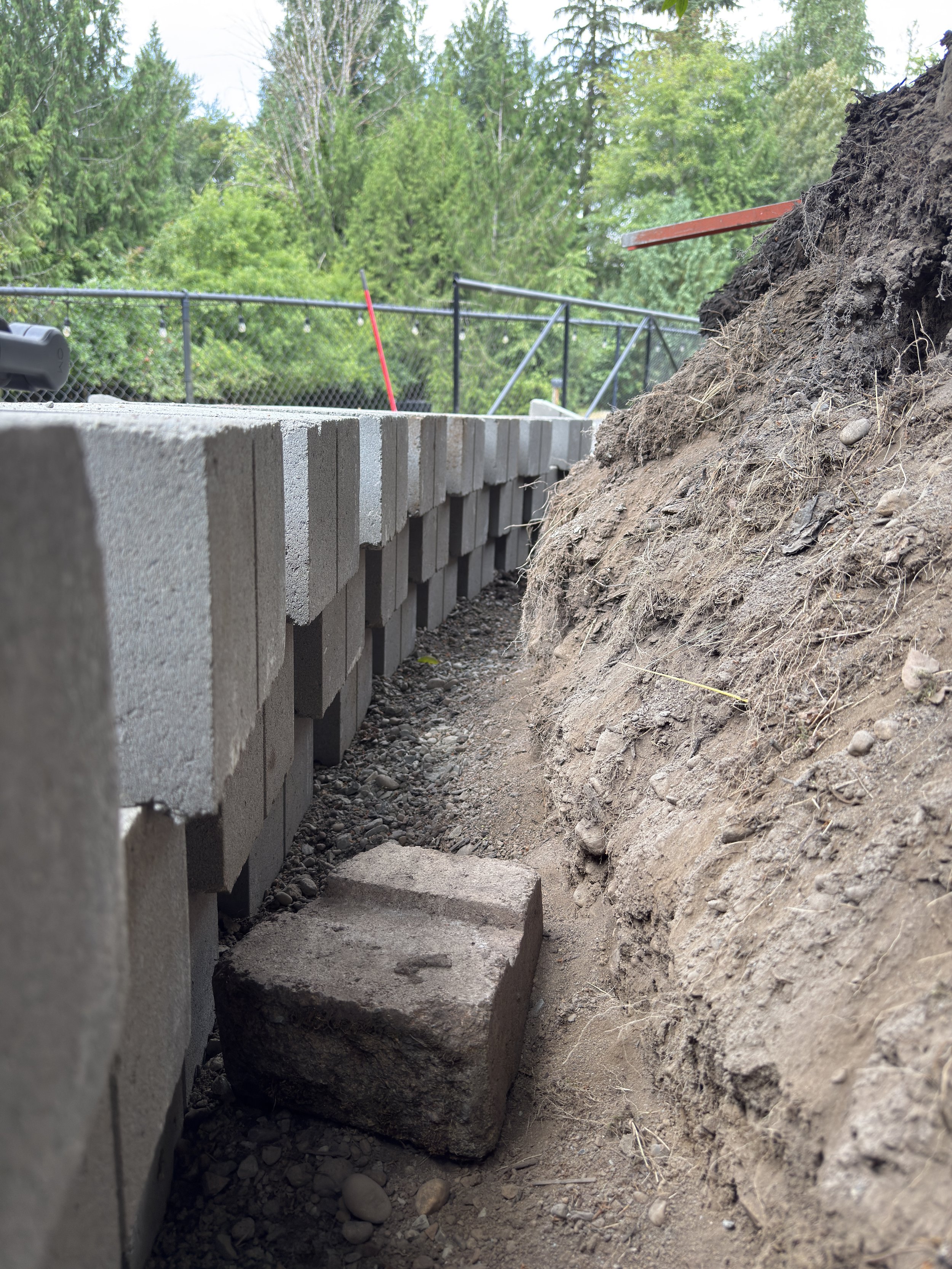
When it rains, water doesn't just run off the surface. It also soaks into the soil behind a wall. If that water has nowhere to go, it builds up and creates something called hydrostatic pressure — essentially, water pushing outward against the back of the wall with nowhere to escape. Over time, that pressure is one of the leading causes of retaining wall failure, whether that shows up as bulging, leaning, or cracking.
This is why proper engineering behind the wall matters just as much as the blocks or stone you see from the front. A well-built wall typically includes:
Drain rock placed directly behind the wall to let water move freely instead of pooling
Perforated drain pipe to carry that water to a safe outlet point
Landscape fabric to keep soil from clogging the drainage system over time
Proper grading so surface water is directed away from the wall in the first place
Drain outlets that give collected water somewhere to go besides straight through your yard
Skipping any of these steps might not cause a problem right away, but Washington's rainfall doesn't let mistakes stay hidden for long. A wall with solid drainage protects itself — and it also protects your home's foundation, since poorly managed water on a slope has a way of eventually finding its way toward the house.
More Usable Space, More Value
A steep, hard-to-mow slope isn't doing much for you as-is. Once it's leveled off and held in place, that same square footage can become a patio, a fire pit area, raised garden beds, or simply a bigger, more usable lawn — especially valuable on smaller lots where every bit of flat ground counts.
That extra usability tends to show up in curb appeal, too. A retaining wall built with intention — especially when paired with a paver patio, a walkway, or landscape lighting — reads as a finished, cohesive landscape rather than a yard with a wall in it. It's the kind of upgrade appraisers and buyers notice.
Material matters here as much as layout. Segmental concrete block is durable and low-maintenance, natural stone ages well and blends into the landscape over time, and boulder walls lean into a more rugged, natural look that suits wooded or heavily sloped lots. The right fit depends on your property, which is exactly why a walk-through with a contractor is worth doing before you settle on one.
Why Professional Installation Matters
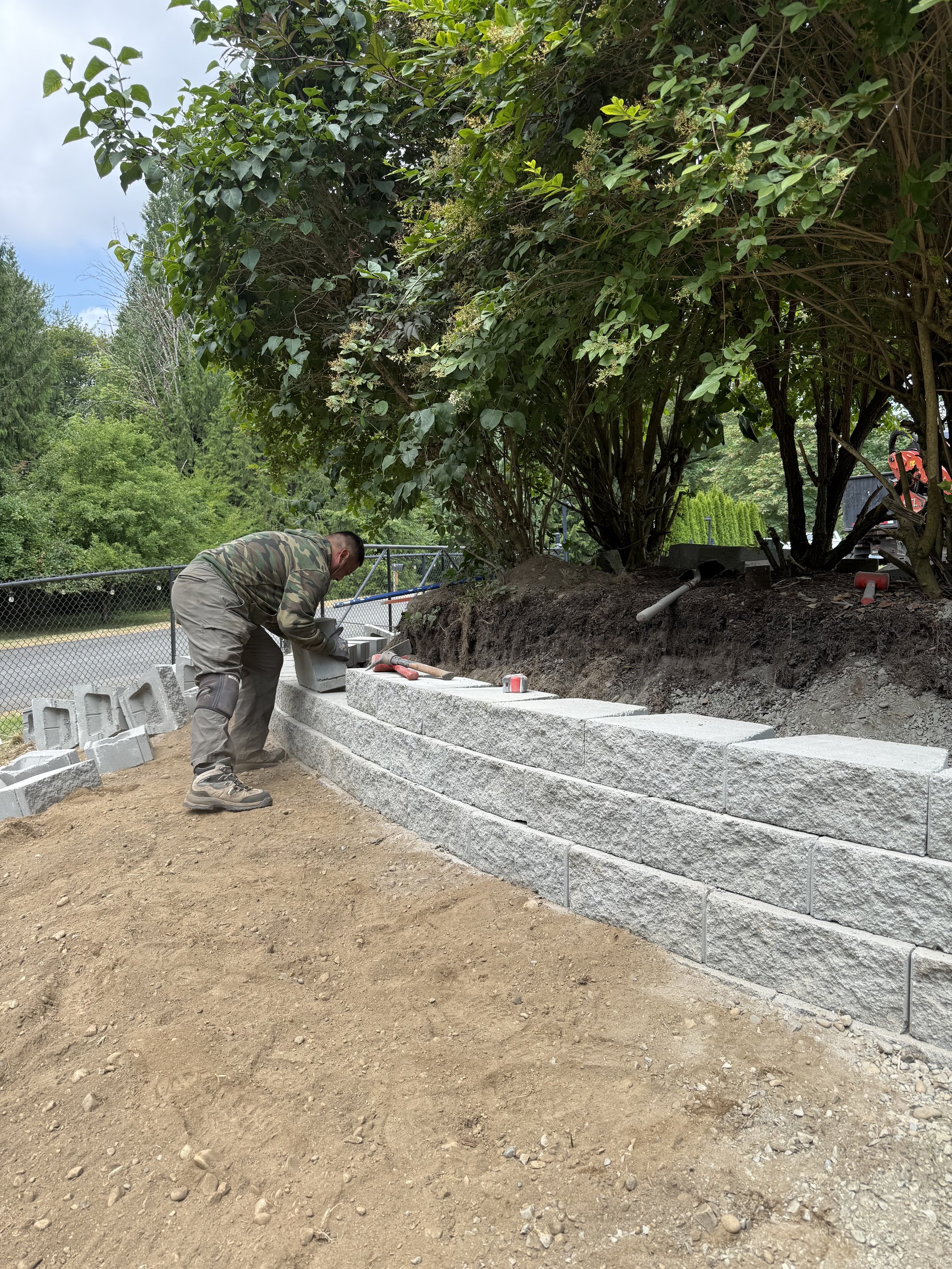
Retaining walls look straightforward from the outside — stack some blocks, and you're done. In reality, most of what determines whether a wall lasts happens before the first block goes down: correct excavation depth, a properly compacted base, drainage installed before backfilling, and careful leveling as the wall goes up.
A wall that skips any of these steps may look fine for a season or two before problems start to show. Retaining walls, especially anything over a couple of feet tall, really aren't a project to treat as DIY-friendly.
Signs Your Property May Need a Retaining Wall
If any of these sound familiar, it may be worth having a conversation with a landscaping professional:
Water pools in the same spot after every rain
You've noticed soil creeping into your driveway or patio
A slope in your yard seems to be getting steeper or more uneven
Plants and mulch keep sliding or washing away
There's a section of yard you'd love to use but can't because of the grade
Bringing It All Together
Retaining walls solve more problems than they get credit for. Done right, they control erosion, manage drainage before it becomes a bigger issue, open up usable outdoor space, and add real curb appeal that shows up in how your whole property is perceived.
The key word there is "done right." Between soil type, drainage engineering, and Washington's rainfall, a retaining wall is one of those projects where the difference between a good contractor and a shortcut shows up years later — usually right when you least want it to.
Spring Landscape has spent years helping homeowners across Washington turn problem slopes into stable, functional outdoor spaces — with the drainage work done right the first time. We proudly serve Auburn, Renton, Kent, Federal Way, Maple Valley, Covington, Milton, Puyallup, Bonney Lake, Sumner, Tacoma, Lake Tapps, Edgewood, and the surrounding communities.
If you've got a slope that's been bothering you, or a drainage issue you'd rather fix now than later, we'd be glad to take a look and talk through your options. Reach out to schedule a consultation.
